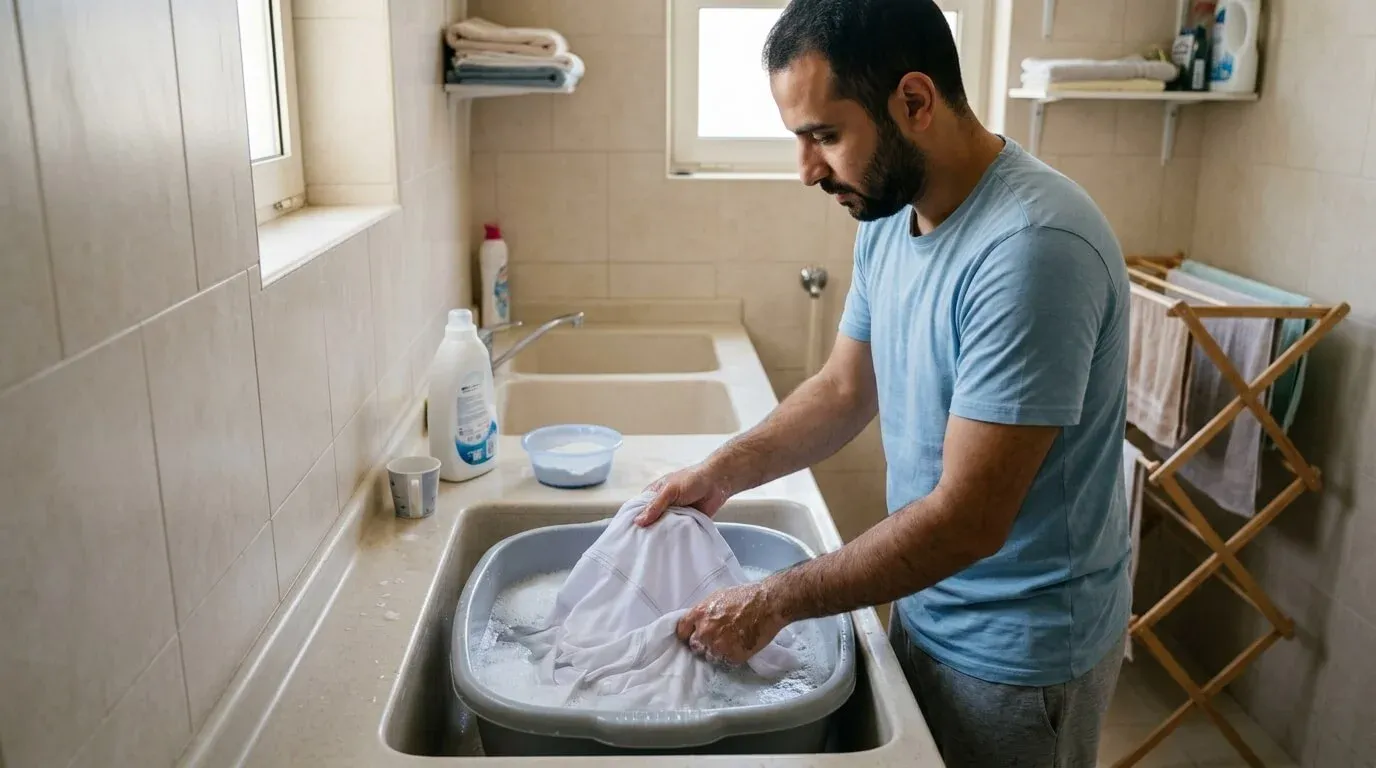
How to Wash Kandura at Home Without Ruining It
How to Wash Kandura at Home Without Ruining It
By Laundrykhalas | 15 Years of Professional CareWashing a kandura at home sounds straightforward until the collar yellows, the fabric stiffens, or the pristine white comes out looking dull gray after just a few cycles. The kandura is not a regular garment. It is a daily symbol of identity, heritage, and presentation standards that matter deeply across the UAE. One wrong wash setting, one wrong detergent, or one rushed ironing session can shorten the life of a high-quality thobe by months. This guide covers exactly how to wash your kandura at home the right way, what to avoid, and when it honestly makes more sense to hand it to professionals.
Quick Answer: How to Wash Kandura at Home Turn the kandura inside out. Use a gentle cold wash cycle at 30°C maximum. Use a high-quality detergent designed for whites, with no bleach. Dry flat in shade, never under direct UAE sun. Iron while slightly damp using steam on a medium-high setting. For stiff collars and cuffs, starch lightly before the final press.
Why Kandura Fabric Needs Special Care
Most kanduras are made from one of three fabrics: pure cotton, polyester-cotton blends, or premium Egyptian cotton. Each behaves differently in a washing machine. Pure cotton kanduras are the most forgiving but the most prone to shrinkage when washed hot. Polyester blends resist shrinkage but trap odors and develop a synthetic sheen when ironed too hot. Egyptian cotton kanduras, which are common for formal and Friday wear, require the most careful handling of all three.
The biggest mistake people make is treating a kandura like a regular white shirt. A regular cotton dress shirt can survive a 40°C or even 60°C wash without obvious damage. A kandura washed repeatedly above 30°C will lose its body, its collar will lose its crispness, and the weave will begin to thin across the shoulders and chest within a few months. The fabric construction in a traditional thobe is designed for volume and structure, not the mechanical stress of hot machine washing.
There is also the UAE climate factor. Washing a white garment in a region where hard water is common creates an invisible problem. Hard water leaves mineral deposits in the fibers that build up over multiple washes, turning white fabric progressively more yellow or gray. Most people blame their detergent when the real culprit is mineral buildup that a standard wash cycle never fully flushes out.
What You Need Before You Start
Get these four things right before you put a single kandura into the machine and you will already be ahead of 90% of home washing attempts.
The right detergent. Use a liquid detergent formulated for white fabrics, not a generic all-purpose powder. Powder detergents in hard-water regions dissolve unevenly and leave residue in the weave. Brands like Persil Abaya and White liquid, or Ariel Whites, are widely available across the UAE and proven on regional water conditions. Add half a cup of white vinegar to the rinse cycle to neutralize mineral deposits without any vinegar smell remaining after drying.
No bleach. Standard chlorine bleach destroys cotton fibers on contact and causes yellowing on polyester blends. If you need to brighten a yellowed kandura, use an oxygen-based whitener like Vanish Gold for Whites added directly to the drum, not the detergent drawer.
A mesh laundry bag. Place the kandura folded loosely inside a large mesh bag before loading it into the drum. This dramatically reduces friction against the drum walls and protects the collar, cuffs, and embroidery from snagging.
The correct machine setting. Select delicate or gentle cycle. Cold or 30°C maximum. Slow spin speed, no higher than 800 RPM. High spin speeds wring the fabric violently and create deep creases at the collar and sleeves that become almost impossible to iron out.
Step-by-Step: How to Wash Kandura at Home
Step 1 - Pre-treat the collar and cuffs before loading
The collar and cuffs of a kandura absorb the most sweat, body oil, and deodorant. These areas need pre-treatment before the wash cycle or they will come out still faintly stained even after a full wash. Apply a small amount of liquid detergent directly to the collar and cuffs and work it in gently with your fingertips. Leave it to sit for 10 to 15 minutes. Do not scrub hard. Scrubbing breaks down the weave threads along the collar seam, which is exactly where most kanduras show wear first.
Step 2 - Turn the kandura inside out
Turning the garment inside out before washing protects the outer surface of the fabric from direct drum friction. It also protects any embroidery, decorative stitching, or collar detailing from catching on the drum baffle during the cycle. For premium kanduras with chest embroidery, this single step is non-negotiable.
Step 3 - Load correctly and set the machine
Place the kandura inside the mesh bag and load it alone or with one other similarly colored white garment at most. Never wash a kandura with towels, jeans, or other heavy items. The weight imbalance causes the machine to agitate harder and the heavier items physically beat against the kandura throughout the cycle. Set your machine to gentle or delicate, 30°C, slow spin. Add your liquid detergent to the drawer and white vinegar directly into the drum before loading.
Step 4 - Remove immediately after the cycle ends
Do not leave the kandura sitting in the drum after the cycle finishes. A damp white garment sitting folded in a warm drum for even 30 minutes will develop deep creases and a slight musty smell that takes several more washes to fully remove. Remove it immediately and shake it out gently to release the fold lines before hanging.
Step 5 - Dry flat in shade, never in direct sun
Direct UAE sunlight bleaches and weakens cotton fibers rapidly. What looks like natural whitening from the sun is actually photodegradation, where UV exposure breaks down the structural integrity of the cotton threads. Hang the kandura on a wide hanger in a shaded, ventilated area or lay it flat on a clean dry surface. It should be about 80% dry before you iron it, not fully dry. Ironing a slightly damp kandura produces a far superior result compared to ironing a fully dried one.
Step 6 - Iron with steam while slightly damp
Set your iron to the cotton setting with steam activated. Begin with the collar, working from the collar points inward toward the center back. Then move to the cuffs, then the sleeves, then the body. Always iron on the reverse side or use a pressing cloth between the iron and the outer fabric to prevent any shine marks. If the kandura has dried out before you can iron it, use a spray bottle to lightly mist the fabric and wait two minutes before pressing.
Step 7 - Starch the collar for structure
A kandura without a crisp collar looks unfinished regardless of how clean it is. After pressing the collar, apply a light spray starch, hold it six inches from the fabric, and press again with the iron. One light application is enough. Over-starching makes the collar brittle and causes cracking at the fold lines over time. Light starch applied consistently wash after wash maintains the structure without degrading the fabric.
How to Remove Yellow Stains from a Kandura
Yellow staining on a kandura is one of the most common complaints from families who wash at home. It happens for three reasons: mineral buildup from hard water, deodorant residue reacting with heat in the dryer or iron, and detergent residue that was never fully rinsed out. The staining usually appears first at the collar, underarms, and cuffs.
For mineral yellowing, soak the kandura in a solution of one cup of white vinegar per five liters of cold water for two hours before washing. This loosens the mineral deposits from the fibers so the wash cycle can flush them out fully.
For deodorant yellowing, apply a paste of baking soda and water directly to the affected area. Leave it for 30 minutes, then brush away gently with a soft toothbrush before washing as normal. Avoid aluminum-based antiperspirants on a kandura entirely. Switch to an aluminum-free deodorant and the collar yellowing will reduce significantly after just three or four washes.
For detergent residue yellowing, the fix is simple. You are likely using too much detergent and the machine is not rinsing it out completely. Reduce your detergent by half and run an extra rinse cycle. Most modern machines use less water than older models, which means standard detergent doses are too high for the actual water volume in the drum.
How Often Should You Wash a Kandura?
In the UAE climate, most men wear a kandura daily. The temptation is to wash after every single wear. In practice, over-washing is the fastest way to degrade a kandura. Each machine wash removes microscopic fibers from the weave. After 50 to 60 washes, the fabric visibly loses its density and the white begins to look tired.
A more sustainable approach: wear once, air out overnight on a hanger in a ventilated room, and spot-clean any minor marks. Reserve a full machine wash for every second or third wear unless the garment is visibly soiled or was worn in heat or physical activity. This alone can double the usable life of your kanduras without any reduction in hygiene or presentation standards.
Common Mistakes That Ruin Kanduras at Home
After 15 years of caring for kanduras professionally, the same avoidable mistakes appear repeatedly. Here are the ones that cause the most damage.
Washing above 40°C. Anything above 30 to 40°C shrinks the body of the garment and sets collar stains permanently into the fabric.
Using fabric softener. Fabric softeners leave a waxy coating on the fibers that traps body odor over time and gives the fabric a limp, unstructured feel. A kandura is meant to hold its shape and volume. Fabric softener works against that entirely.
Machine drying on high heat. The drum heat of a standard tumble dryer shrinks cotton kanduras measurably after just three or four cycles. If you must use a dryer, use the lowest heat setting for no more than 10 minutes to release the deep creases, then remove and hang to finish drying naturally.
Washing with dark or colored garments. Color transfer from dark garments onto white fabric is permanent. Always wash kanduras exclusively with other whites.
Ironing a fully dry kandura on high heat. Without moisture in the fabric, high-heat ironing crushes the fibers rather than smoothing them. The result is a shiny, flat look on the chest and sleeves that signals poor care immediately.
When Home Washing Is Not Enough
Some situations genuinely call for professional care. A kandura with deep set-in collar stains that survived three or four home washes will not respond to another home wash. The stain has bonded with the fibers and requires professional pre-treatment with enzyme-based stain removers and controlled wet cleaning to lift it without damaging the surrounding fabric.
Premium kanduras, formal occasion thobes, or garments with chest embroidery and decorative work also deserve professional handling. The risk of snagging embroidery on a home machine drum, or of a single high-heat ironing moment distorting embroidery thread, is simply not worth it on a garment that may represent significant investment.
Laundrykhalas handles kandura and thobe cleaning across all seven UAE emirates, with free pickup and delivery. Every kandura is treated with the correct pre-soak, washed in professional-grade controlled systems, hand-finished, and starched to a precise crispness. It comes back looking better than a home wash can achieve, consistently, every time.
Frequently Asked Questions
Can I wash a kandura in a washing machine?
Yes, you can wash a kandura in a washing machine safely if you use the gentle or delicate cycle, cold or 30°C water, slow spin speed below 800 RPM, and place the garment inside a mesh laundry bag first. Avoid high spin speeds, hot water, and washing alongside heavy garments like towels or jeans.
What temperature should I wash a kandura at?
Wash a kandura at 30°C maximum. Temperatures above 40°C cause cotton fabric to shrink, set collar stains permanently, and degrade the body and structure of the garment over time. Cold water with a quality enzyme-based detergent cleans effectively without the shrinkage risk.
Why does my kandura turn yellow after washing?
Kandura yellowing after washing is caused by three things: mineral deposits from hard water building up in the fibers, aluminum-based deodorant residue reacting with heat during ironing or machine drying, and detergent residue that was not fully rinsed out. Soak in white vinegar solution before washing and switch to an aluminum-free deodorant to prevent recurrence.
How do I keep my kandura white and crisp?
To keep a kandura white and crisp: wash at 30°C with liquid detergent for whites, add half a cup of white vinegar to the rinse cycle to remove mineral deposits, dry in shade not direct sunlight, iron while slightly damp with steam, and apply light spray starch to the collar and cuffs before the final press. Never use chlorine bleach as it yellows the fabric over time.
Can I put a kandura in the dryer?
It is best to avoid tumble drying a kandura on high heat. Drum heat shrinks cotton kanduras measurably after just a few cycles. If you need to use a dryer, use the lowest heat setting for 10 minutes maximum to loosen deep creases, then remove and hang to finish drying naturally in a ventilated shaded area.
How often should I wash my kandura?
In the UAE climate, washing a kandura after every second or third wear is enough for most daily-use garments, provided you air it out overnight on a hanger between wears. Over-washing is the primary cause of fabric thinning, color dullness, and collar degradation. Spot-clean minor marks rather than running a full wash cycle each time.
What is the best detergent for washing a kandura?
Use a liquid detergent formulated for white fabrics such as Persil White or Ariel for Whites. Avoid powder detergents in regions with hard water as they dissolve unevenly and leave residue in the weave. For yellowed kanduras, add an oxygen-based whitener like Vanish Gold for Whites directly into the drum, not the detergent drawer.
Want your kandura looking professionally crisp without the effort?
Laundrykhalas handles kandura cleaning, professional pressing, and collar starching across all seven UAE emirates. Free pickup and delivery. Results that home washing cannot match.