How Often Should You Really Wash Bedding and Towels?
Most bedding advice is written for temperate climates and quietly assumes you are not perspiring into the sheets for four months of the year. In Bahrain the standard intervals need adjusting, and the item people neglect most, pillows, is the one that matters more than the sheets on top of them.
A realistic schedule
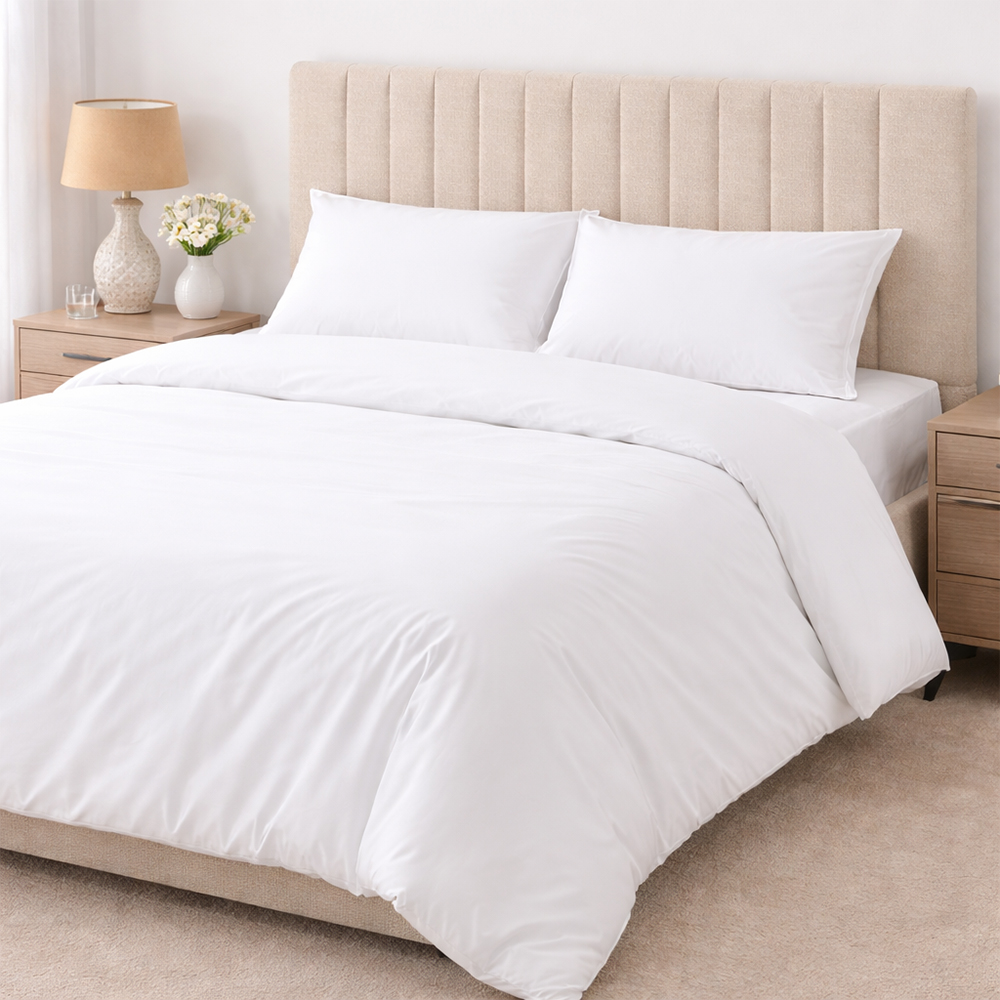
Sheets and pillowcases: weekly through the cooler months, and every four or five days in summer. You lose a meaningful amount of moisture overnight in July, and it goes into the fabric. Duvet covers: every one to two weeks. The duvet itself: two or three times a year. Pillows: every three to four months, the actual pillow, not the case. Mattress protector: every couple of months. Bath towels: after three or four uses, and sooner in summer. Hand towels: every two or three days, because they are used constantly by everyone.
Why pillows matter
A pillow absorbs sweat and skin oils through the case for months. Over a year, a neglected pillow gets noticeably heavier and develops yellow patches, and that discolouration is body oil that has oxidised. It is also the main reason a bed can smell faintly stale even with fresh sheets on it.
Most synthetic pillows can be washed; feather and down usually can too but need thorough drying, which is the hard part. Memory foam generally cannot be washed at all. In every case the failure mode is the same: a pillow that is not completely dry inside will grow mildew in the core, and in Bahrain's humidity that takes days of proper drying rather than a few hours on a balcony.
Why towels go stiff and smell
Two culprits, and both are things people do deliberately. Too much detergent leaves residue that stiffens the loops and traps odour, towels need less detergent than you think, not more. Fabric softener coats the fibres with a waxy film, which is exactly what makes a towel feel plush and exactly what stops it absorbing water. A towel that has stopped drying you properly is usually a softener problem.
The third factor is specific to here: a damp towel on a hook in a humid bathroom does not dry between uses, and bacteria establish quickly. Spread towels out rather than folding them over a rail, and if a bathroom has no window or extraction, take them out to dry.
Resetting towels that have gone wrong
Wash them alone, with no detergent and no softener, on a warm cycle. Repeat once. That strips accumulated residue and is far more effective than any additive. Then use half the detergent you were using and drop the softener entirely.
The bulk problem
Bedding and towels are heavy, slow to dry and awkward in a domestic machine, a duvet barely fits, and if it does not tumble freely it does not get clean. It is also the load most likely to come back not-quite-dry in a Bahrain summer, with the smell that follows. Our bed and bath service handles sheets, duvets, pillows and towels properly, with the drying capacity that is genuinely the difficult part.
For everything else, a wash and fold bag is BD 5.000 for 6 kg with free pickup over BD 3.000, and per-item pricing sits on the price list.