Abaya and Bisht Dry Cleaning in Riyadh: What It Costs and When You Need It
Abayas and bishts are pieces that need extra care when they go to a laundry. A black abaya can fade or go shiny, embroidery and stones can come loose, and a bisht with gold edging may be worn only for weddings and Eid. The good news is that the right method for each is clear, and so is the price.
Quick answer: on our Saudi price list (October 2026), an embroidered, beaded, lace or chiffon abaya is SAR 35 to dry clean, while a plain everyday abaya is washed gently in water and pressed for SAR 18. A wedding abaya is SAR 50. A bisht should never be washed in water: it is dry cleaned in solvent and priced per piece after inspection, and pressing alone is SAR 30. Abayas come back pressed on a hanger within 24 hours.
What does each option cost?
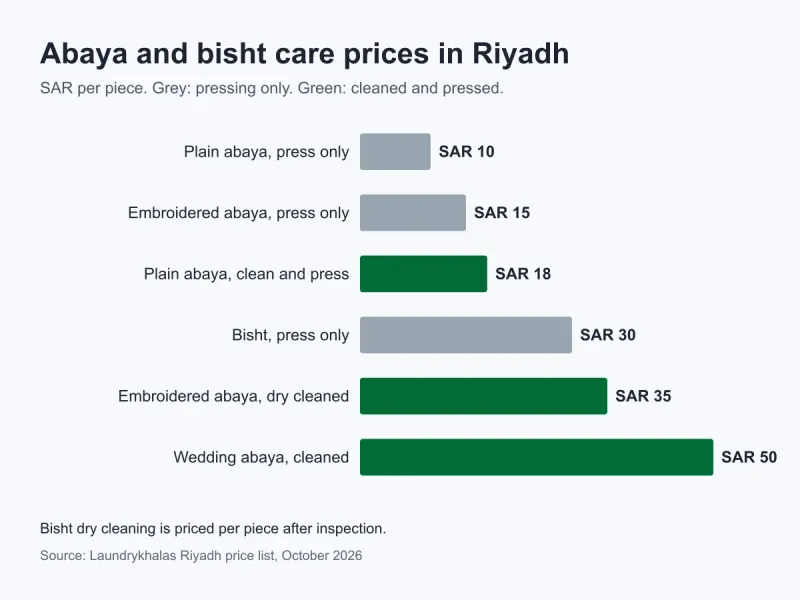
- Plain abaya, clean and press: SAR 18. Washed gently in water and detergent to protect the black, then steam pressed so it hangs straight.
- Embroidered or delicate abaya, dry cleaned: SAR 35. For beading, stones, lace or chiffon panels. Cleaned in solvent and hand finished at low temperature.
- Press only: SAR 10 for a plain abaya and SAR 15 for a delicate one, if you have washed it yourself.
- Wedding abaya: SAR 50, for heavier occasion pieces with lace and crystals.
- Bisht: SAR 30 to press. Dry cleaning is priced per piece after we inspect it, and the price is confirmed on WhatsApp before any work starts.
Which abayas need dry cleaning and which can be washed?
Dry cleaning is not really dry. The garment is cleaned in a liquid solvent instead of water. Water is what makes fibres swell, dyes bleed and glued or stitched stones loosen, so solvent is the safe route for anything decorated. Plain crepe or nida abayas with no embellishment are fine in water if they are washed gently, and the cheaper route makes sense for them.
- Dry clean (SAR 35): stones, crystals, sequins, beading, heavy embroidery, lace, chiffon or silk panels, and anything labelled Dry Clean Only.
- Wash and press (SAR 18): plain everyday abayas in crepe, nida or similar fabrics with a care label that allows washing.
- When in doubt: send a photo of the label and the trim on WhatsApp and we will tell you which service it needs before pickup.
Here is what the choice is worth over a year. One plain abaya cleaned every week costs 52 x SAR 18 = SAR 936 on clean and press. If it went to dry cleaning every week, it would be 52 x SAR 35 = SAR 1,820, almost double, with no benefit for a plain piece. If you wash it at home and send it for press only, it is 52 x SAR 10 = SAR 520.
What does getting ready for Eid or a wedding cost?
As a worked example, a household preparing two embroidered abayas, one bisht for pressing and two thobes would pay 2 x SAR 35 = SAR 70 for the abayas, SAR 30 for the bisht and 2 x SAR 15 = SAR 30 for the thobes: SAR 130 in total, with free pickup because the order is above SAR 30. If a stone has come off one abaya, reattachment is SAR 55, and it can go in the same pickup.
Bishts are worn for formal occasions, and more in the cooler months. ERA5 weather records for central Riyadh (2016 to 2025) put the average daily high at 21.3 °C in January and 22.9 °C in December, against 44.1 °C in July. Plan the clean before the season, not the night before the event.
How should a bisht be cleaned and stored?
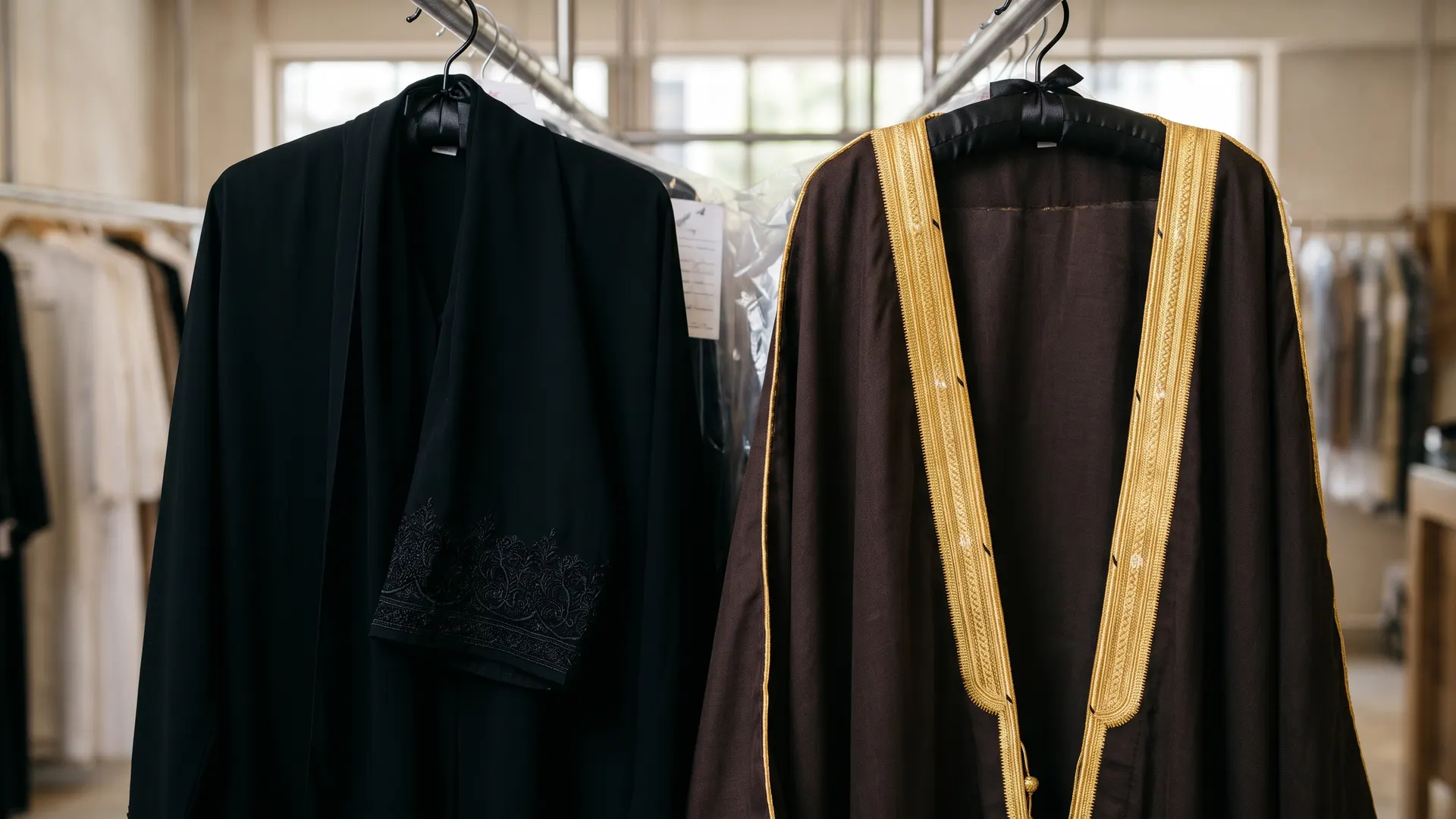
A bisht is traditionally woven from fine wool or camel hair and edged with gold or silver zari thread. Water is the main risk. Wool shrinks and felts when it is wet and agitated, and the edging can pucker or tarnish. That is why a bisht is inspected first, cleaned in solvent so the wool keeps its size and the zari keeps its shine, and finished with low steam rather than a hot iron.
- Do not wash it. Not by hand and not on a delicate cycle.
- Keep perfume off the zari. Oils and alcohol can mark metallic thread. Put perfume on before you put the bisht on, and let it dry.
- Hang it on a broad hanger. A thin wire hanger leaves marks on the shoulders.
- Store it covered and dry, away from sunlight, and air it before you wear it again.
- Fresh but not dirty? If it only needs the creases out, press only at SAR 30 is enough.
How do you care for a black abaya between cleans?
A lot can go wrong with a black abaya at home, in the wash and under the iron. Riyadh adds dust: the Copernicus CAMS model puts at least one dusty hour over the city on almost every day of the year. It is a coarse model and cannot separate one district from another, but it explains why hems pick up dust so quickly.
- Shake or brush the hem when dry. Dry dust brushes off. Wet dust in a wash becomes a grey film.
- Wash plain abayas inside out, in cool water, on a gentle cycle, with a mild detergent for dark colours. Hot water fades black faster.
- Dry in shade. Strong sun fades black fabric. Hang it on a hanger so it dries straight.
- Iron on the reverse at low heat. A hot iron on the face of crepe or nida leaves a shiny patch. Never iron over stones or beading.
- Treat makeup and perfume marks quickly. Foundation and perfume oil are oil-based. Tell us about them when you book: they are spot-treated by hand at no extra cost.
What we cannot do: no cleaning method brings back black that has already faded from hot washes or sun, and a stone that has fallen off and been lost cannot be cleaned back on. Loose stones can be reattached by a tailor, and if an abaya needs shortening as well, see clothes and suit alterations in Riyadh. For thobes in the same order, our guide to white thobe wash and press vs press only covers the whites.
Where can you book abaya dry cleaning in Riyadh?
Our abaya and bisht dry cleaning service collects in Riyadh within 60 minutes from 8 AM to 11 PM, and pickup is free from SAR 30. In the north there is abaya dry cleaning in Hiteen, abaya dry cleaning in Al Yasmeen and abaya dry cleaning in Al Malqa, plus abaya dry cleaning in Al Aqeeq. For abayas you wash yourself, abaya pressing in Al Rawdah and our press only ironing service cover the rest of the city. South and central homes are covered too, including laundry pickup in Al Shifa and laundry pickup in Al Dirah. Every district is on our Riyadh laundry service page.
Questions people ask
How much does abaya dry cleaning cost in Riyadh?
On our Saudi price list (October 2026), an embroidered, beaded, lace or chiffon abaya is SAR 35 to dry clean. A plain everyday abaya is washed gently in water and pressed for SAR 18. A wedding abaya is SAR 50. Abayas come back pressed on a hanger within 24 hours.
Does a plain abaya need dry cleaning?
No. A plain abaya with no stones, beads or lace can be washed gently in water, which is how our SAR 18 clean and press service handles it. Check the care label first: if it says Dry Clean Only, it goes to solvent cleaning instead.
How do you wash a bisht?
You should not wash a bisht in water. The fine wool can shrink or felt and the zari edging can be damaged. A bisht should be dry cleaned in solvent and finished with low steam. We inspect each bisht and confirm the price on WhatsApp. Pressing alone is SAR 30.
Will ironing make a black abaya shiny?
It can, if a hot iron touches the face of crepe or nida. Press abayas on the reverse side at low heat, with a cloth over any stonework. That is how they are pressed here, so they come back matte. Press only is SAR 10 for a plain abaya and SAR 15 for a delicate one.
To book, send your location pin and a photo of any embroidered piece or bisht on WhatsApp, and the price is confirmed before pickup.
Prices from the Laundrykhalas Saudi price list, October 2026. Weather from ERA5 reanalysis (ECMWF) via Open-Meteo, central Riyadh, 2016 to 2025. Dust from the Copernicus CAMS model via Open-Meteo, 2023 to 2025.