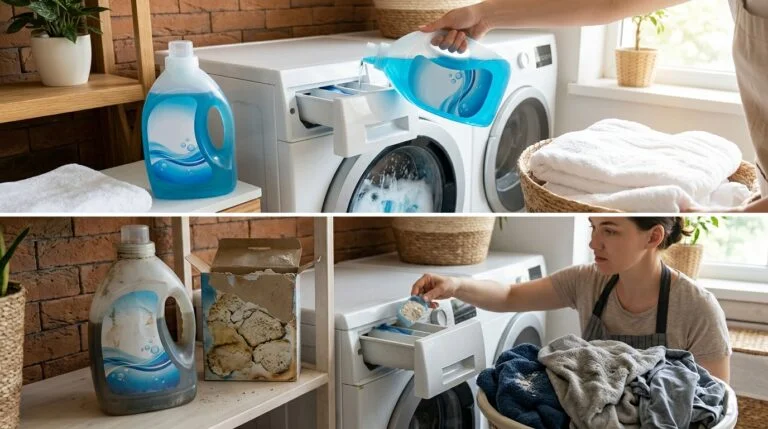
Does Laundry Detergent Expire? Shelf Life, Signs & What to Do
Yes, laundry detergent expires. Liquid detergent typically lasts 6 to 12 months after opening and up to 18 months unopened. Powder detergent lasts longer - up to 2 years when stored correctly in a dry environment. Laundry pods have a shelf life of around 15 months. After these periods, detergent does not become dangerous but it loses cleaning power, may leave residue on clothes, and struggles to remove stains and odors effectively.
How Long Does Laundry Detergent Last?
The shelf life varies significantly by detergent type and storage conditions. Here is what each type can realistically last:
Liquid laundry detergent: 6 to 12 months after opening, up to 18 months unopened. Liquid formulas contain surfactants and enzymes that break down over time, especially when exposed to heat. In UAE temperatures, degradation happens faster than the manufacturer's guidelines assume, because those guidelines are written for temperate climates.
Powder laundry detergent: 1 to 2 years when stored in a dry, sealed container. Powder is more stable than liquid because it has no water content to encourage microbial growth or chemical reactions. The main enemy of powder detergent is moisture - once humidity gets in, the powder clumps, hardens, and loses its ability to dissolve properly in the wash.
Laundry pods and capsules: Around 15 months from manufacture. The outer film that encases the concentrated formula is sensitive to moisture and heat. In a humid bathroom or laundry room, pods can stick together, rupture prematurely, or refuse to dissolve fully in the drum.
Why UAE Heat and Humidity Accelerates Detergent Expiry
Most detergent shelf life guidelines are written for European or North American climate conditions - average temperatures of 15 to 20 degrees Celsius and moderate humidity. The UAE presents a completely different challenge.
Summer temperatures in Dubai, Abu Dhabi, and Sharjah regularly exceed 45 degrees Celsius. Coastal humidity in areas like Dubai Marina, JBR, Abu Dhabi Corniche, and Ajman reaches 80 to 90 percent during summer months. These two factors combined - extreme heat and high humidity - accelerate every form of detergent degradation:
- Enzymes in liquid detergent break down 2 to 3 times faster above 35 degrees Celsius than at room temperature.
- Powder detergent absorbs ambient humidity and begins clumping within weeks if the container is not properly sealed.
- Laundry pods stored in a bathroom or near a washing machine in a humid UAE laundry room can fuse together within a month.
- Leaving any detergent in a car, balcony storage, or unventilated storeroom during summer causes rapid breakdown.
The practical implication for UAE households: halve the shelf life estimates on detergent packaging. If a bottle says 12 months, treat it as 6 months if stored anywhere warm or humid.
Signs Your Laundry Detergent Has Gone Bad
You do not always need to check the expiry date. The detergent itself will tell you when it has deteriorated:
Liquid detergent has separated into layers: Fresh liquid detergent is a uniform consistency throughout. If you shake the bottle and see two distinct layers - a watery layer on top and a thicker layer below - the surfactants and enzymes have begun separating. Gentle shaking sometimes re-emulsifies mild separation, but significant layering means the formula has broken down and will not perform well in the wash.
Liquid has turned unusually thick or gel-like: Some thickening is normal in cold storage, but if the detergent is at room temperature and will not pour without effort, the formula has degraded. Thick detergent also struggles to dissolve fully in the wash drum and can leave white streaks on dark fabrics.
Powder has formed hard clumps or a solid block: Moisture exposure causes powder detergent to partially activate and then harden. Hard clumps do not dissolve properly in the wash - they either pass through the cycle undissolved or stick to the drum wall and leave chalky residue on clothes.
Strange or sour smell: Fresh detergent has a clean, consistent fragrance. A musty, sour, or chemical smell indicates microbial activity or ingredient breakdown. Washing clothes with rancid-smelling detergent transfers that odor to the fabric.
Clothes are not coming out clean: If clothes smell stale after washing, stains are not lifting, or fabrics feel slightly tacky, the detergent is no longer doing its job. This is the most important test - results matter more than the date on the bottle.
What Happens When You Wash Clothes With Expired Detergent
Expired detergent does not ruin clothes immediately, but continued use creates several problems:
Stains do not lift properly: The enzymes responsible for breaking down protein stains (blood, sweat, food), oil stains (grease, cooking oil, oudh), and tannin stains (coffee, karak chai, tea) lose potency first. A shirt with a karak chai stain washed in expired detergent will often come out with the stain still visible but faded, giving the impression it cleaned when it did not fully remove the stain.
Odors remain in fabric: Fresh detergent contains surfactants that physically lift odor-causing bacteria and sweat compounds from fiber. Degraded surfactants are less effective, meaning gym wear, thobes worn in heat, and children's school uniforms can come out of the wash still smelling stale.
Detergent residue builds up on fabric: Expired liquid detergent that has thickened or separated does not rinse out fully. This leaves a film on fabric that makes clothes feel stiff, look dull, and can cause skin irritation for people with sensitive skin - particularly relevant for children's clothing and abayas worn close to the skin.
Extra wash cycles waste water and energy: Households often re-wash items that did not come out clean, not realizing the detergent is the problem. In the UAE where water and electricity costs are significant, this waste adds up quickly over weeks of using degraded detergent.
Can You Still Use Expired Laundry Detergent?
For lightly soiled everyday items - a t-shirt worn once, bed sheets changed weekly, towels that are not heavily used - slightly past-date detergent will usually still clean adequately. The performance loss is gradual, not sudden.
However, do not use expired detergent for:
- Heavily stained items - the enzymes needed for stain removal are the first to degrade.
- Baby clothing and children's items - residue buildup can cause skin reactions.
- Thobes, kanduras, and white garments - degraded detergent leaves yellowing and dullness that is difficult to reverse.
- Gym wear and active clothing - sweat odors require fully active surfactants to remove completely.
- Silk, wool, and delicate fabrics - residue from degraded detergent damages delicate fibers over time.
How to Store Detergent Correctly in the UAE
Given the UAE climate, storage habits make a significant difference to how long detergent stays effective:
- Store in an air-conditioned space - a kitchen cabinet or bedroom storage shelf is better than a bathroom or laundry room where humidity is high.
- Keep containers tightly sealed after every use - even brief exposure to humid air begins degrading powder detergent.
- Never store detergent in a car, balcony, or outdoor store room - summer temperatures in these spaces exceed 60 degrees Celsius.
- Buy quantities you can use within 3 to 6 months rather than stocking up in bulk.
- Keep pods in their original resealable bag and press out excess air before closing.
- Store powder detergent in an airtight plastic container rather than the original cardboard box if you live in a coastal area.
Does Expired Detergent Kill Bacteria?
Standard laundry detergent is not a disinfectant - it cleans but does not reliably kill bacteria even when fresh. As it degrades, its ability to remove bacteria from fabric decreases further. For households that need genuine antibacterial washing - baby items, hospital or clinic uniforms, sports gear, or clothing worn during illness - expired detergent should never be used. A dedicated antibacterial laundry product or a professional laundry service with commercial-grade wash cycles provides the hygiene level these items require.
When to Call a Professional Laundry Service
There are situations where home washing with any detergent is not the right choice:
- Thobes and kanduras that need whitening and crisp starching - home detergent cannot replicate professional whitening agents.
- Heavily stained garments that have been washed multiple times without success.
- Luxury fabrics - silk, cashmere, embroidered abayas, and designer garments that need fabric-specific cleaning protocols.
- Carpets, curtains, and large linen items that need commercial-grade extraction equipment.
- Items with persistent odors that survived multiple home wash cycles.
At Laundrykhalas, our laundry and dry cleaning service uses commercial-grade, fresh detergents and fabric-specific cleaning protocols across all UAE emirates. Free doorstep pickup and 24-hour delivery across Dubai, Abu Dhabi, Sharjah, Ajman, Ras Al Khaimah, Fujairah, and Umm Al Quwain.
FAQ: Does Laundry Detergent Expire?
Does laundry detergent really expire?
Yes. Laundry detergent expires. Liquid detergent lasts 6 to 12 months after opening, powder detergent up to 2 years, and laundry pods around 15 months. After these periods, cleaning effectiveness decreases even if the product looks and smells normal.Can I use 2-year-old laundry detergent?
It depends on the type. Powder detergent stored in a sealed, dry container may still perform adequately at 2 years. Liquid detergent 2 years old has almost certainly degraded significantly and will struggle with stains and odors. Smell it, check for separation or clumping, and test on a lightly soiled item before using on anything important.Does powder detergent last longer than liquid?
Yes. Powder detergent generally outlasts liquid by 6 to 12 months because it has no water content to support chemical breakdown. However, in the UAE's humid coastal areas, powder exposed to humidity will clump and degrade faster than in drier inland areas.How does UAE heat affect laundry detergent shelf life?
Significantly. Enzymes in liquid detergent break down 2 to 3 times faster above 35 degrees Celsius. UAE summer temperatures regularly exceed 45 degrees in storage areas like cars, balconies, and outdoor storerooms. Treat the shelf life on detergent packaging as half the stated duration if storing in a warm or humid environment.Can expired detergent leave residue on clothes?
Yes. Thickened or separated liquid detergent does not dissolve or rinse out fully, leaving a film on fabric that causes stiffness, dullness, and skin irritation. This is especially noticeable on dark fabrics which show white streaking.Should I use more expired detergent to compensate?
No. Using more degraded detergent increases residue buildup without meaningfully improving cleaning. If your detergent is no longer performing, replace it rather than adding more.What is the best way to store detergent in the UAE?
Store in an air-conditioned space in a tightly sealed container away from direct sunlight, humidity, and heat. A kitchen cabinet is better than a bathroom or laundry room. Never store in a car or outdoor area during UAE summer.Reviewed by the Laundrykhalas editorial team, with hands-on experience evaluating laundry care across UAE households in Dubai, Abu Dhabi, and Sharjah.