How to Remove Carpet Stains in UAE Homes: What Works and What Ruins Your Carpet
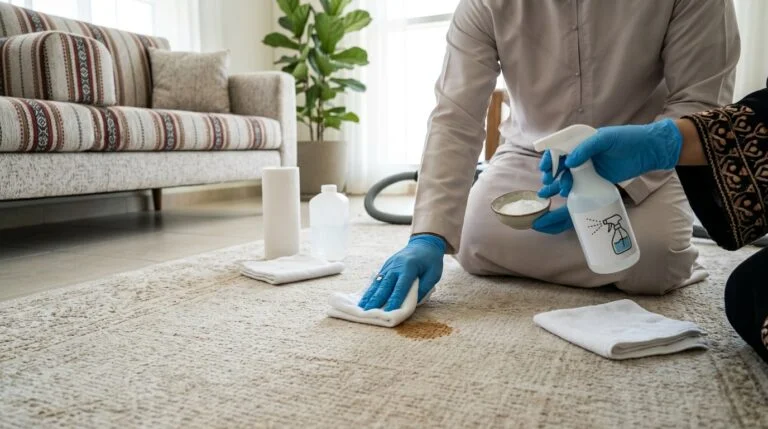
To remove a carpet stain in a UAE home, act immediately. Blot the spill with a clean white cloth, never rub. Mix one cup of cold water with half a teaspoon of clear dish soap. Apply the solution to the stain, let it sit for five minutes, then blot firmly until the stain lifts. Rinse with plain cold water and blot dry completely. In UAE humidity, leaving any moisture in the carpet for more than two hours risks mold forming beneath the fibers.
UAE carpets face challenges that standard guides ignore: ultra-fine desert sand that cuts fibers daily, karak chai and saffron spills that set within minutes, oudh oil and bakhoor residue that require specific treatment, and coastal humidity in areas like Dubai Marina and Abu Dhabi Corniche that slows drying and creates mold risk. Every method in this guide is written specifically for those conditions.
The 60-Second Rule: Basic Steps for Any Fresh Stain
Follow these steps for any fresh liquid spill before reaching for a specific cleaning solution:
- Blot immediately: Press a clean white cloth or paper towel firmly onto the stain. Never rub. Lift and repeat with a fresh section of cloth until no more liquid transfers.
- Work inward: Always blot from the outer edge of the stain toward the center to stop it spreading.
- Remove solids first: For food or mud, scoop up the solid material with a spoon before applying any liquid.
- Use cold water only: Hot water sets protein stains, blood, milk, egg, permanently into the fiber.
- Apply solution to cloth, not carpet: Never pour cleaning solution directly onto the carpet pile.
- Dry completely: In UAE humidity, a damp carpet left more than two hours can develop mold beneath the surface. Use a fan to speed drying.
The UAE Homemade Carpet Stain Remover That Works on Most Stains
Before reaching for commercial products, this homemade paste removes the majority of common carpet stains using ingredients found in every UAE household. Mix the following together slowly until they form a thick paste:
- Half a cup of baking soda
- One tablespoon of clear dish soap
- One to two tablespoons of cold water
Apply the paste directly to the stain using a soft brush or old toothbrush, working it gently into the carpet fibers. Leave it for 10 to 15 minutes. Press a clean damp cloth onto the area and lift the residue. Repeat once if needed. Always test on a small hidden section of carpet first, particularly on wool, silk, or dark-colored rugs, to confirm there is no color transfer.
How to Remove the Most Common Carpet Stains in UAE Homes
Different stains need different treatments. Using the wrong product can make a stain permanent. Here is a stain-by-stain breakdown based specifically on what UAE households encounter most.
Sand and Desert Dust
Sand is the most common carpet problem in UAE homes and the most mishandled. It does not stain in the traditional sense but acts like fine sandpaper that cuts carpet fibers with every footstep. The correct approach is always dry removal only, never wet sand to remove it.
Let wet sand dry completely before touching it. Vacuum slowly using a brush attachment, passing over the area multiple times from different directions. For deeply embedded fine desert dust, sprinkle baking soda, let it sit for 15 minutes, then vacuum again. Wetting sand turns it into an abrasive paste that is harder to extract and significantly increases mold risk in humid coastal areas.
Oudh Oil and Bakhoor Residue
Oudh oil is one of the hardest carpet stains to remove and one of the most common in UAE homes. The oil penetrates fiber quickly and the dark pigment bonds within minutes of contact. Act immediately.
Sprinkle a generous amount of cornstarch or baking soda directly onto the fresh oil stain. Do not touch the stain itself. Leave the powder for at least 30 minutes to absorb as much oil as possible, then vacuum slowly. Follow with a small amount of clear dish soap diluted in cold water, blotting gently with a white cloth. For bakhoor smoke residue on light-colored carpets, a diluted white vinegar solution blotted gently lifts the residue effectively. Oudh oil that has dried and set into the fiber requires professional solvent treatment, home methods will not fully remove it at that stage.
Karak Chai and Coffee
Blot the spill immediately to absorb as much liquid as possible. Mix one tablespoon of white vinegar, one tablespoon of clear dish soap, and two cups of cold water. Apply a small amount to the stain using a white cloth, blotting after each application. Do not pour the solution directly onto the carpet.
Rinse by blotting with a cloth dampened with plain cold water. Press a dry towel onto the area and add weight to draw out remaining moisture. Karak chai contains milk and tea tannins, two different substances that may need a second treatment. Stains that have sat for more than an hour may require professional extraction.
Grease and Cooking Oil
Sprinkle cornstarch or baking soda generously over the fresh stain immediately. Leave it for at least one hour to absorb the oil, then vacuum thoroughly. Follow with a small amount of clear dish soap diluted in cold water, blotting gently. Never use warm water on grease, heat drives oil deeper into the fiber. Repeat the powder step if the stain reappears as the carpet dries.
Red Wine and Fruit Juice
Cover the stain immediately with salt or baking soda. Leave for 10 minutes to draw the liquid upward, then vacuum. Apply a mixture of one tablespoon of dish soap and one tablespoon of white vinegar in two cups of cold water, blotting steadily. For stubborn marks, 3 percent hydrogen peroxide can help but always test on a hidden area first, it can bleach or lighten wool and natural fiber rugs.
Pet Accidents
Blot up as much urine as possible with paper towels and firm pressure. Do not scrub. Apply an enzymatic cleaner following the product instructions exactly. Enzymatic cleaners break down the uric acid crystals that cause the odor. Standard detergents only mask the smell temporarily but leave the scent markers that attract pets to repeat in the same spot.
Allow the area to dry completely with a fan running. In humid areas like Dubai Marina, Abu Dhabi Corniche, or JBR, drying without airflow takes far longer and mold can form beneath the carpet backing within 24 hours. If the odor returns after drying, the urine has penetrated the underlay, professional hot water extraction is the only reliable solution at that point.
Blood Stains
Always use cold water on blood, never warm or hot. Apply cold water and blot firmly. Mix one tablespoon of dish soap with two cups of cold water and blot repeatedly. For dried blood, a paste of meat tenderizer powder and cold water can help break down the protein. Rinse thoroughly with cold water and blot completely dry.
Ink and Marker
Apply rubbing alcohol or isopropyl alcohol to a clean white cloth and blot the stain from the outside inward. Do not pour alcohol directly onto the carpet. The alcohol lifts the ink into the cloth rather than spreading it. Rinse with cold water and blot dry. Permanent marker requires professional solvent treatment.
Fresh Stains vs. Dried Stains: What Changes
Fresh stains sit above the fiber surface and respond well to blotting and basic cleaning solutions. Dried stains have bonded with the fiber through oxidation or protein coagulation and require rehydration first. Dampen the area lightly with cold water and let it sit for a few minutes before applying any cleaning solution.
Old stains that have been through multiple failed cleaning attempts are the hardest. Each wrong treatment adds a layer of residue that traps the original stain deeper. If a stain has been treated more than twice without success, stop. Further DIY attempts increase the risk of permanent fiber damage.
What Not to Do When Removing Carpet Stains
- Never rub a stain. Always blot. Rubbing frays carpet fibers and spreads the stain outward.
- Never use hot water. It sets protein stains and can shrink natural fiber carpets.
- Never pour cleaning solution directly onto the carpet. Apply it to a cloth first.
- Never use bleach on colored carpets. It removes dye permanently.
- Never stack multiple cleaning products. Mixing chemicals can damage fibers or create fumes.
- Never leave a wet carpet without proper drying. In UAE humidity, a damp carpet can develop mold within 24 to 48 hours.
When to Call a Professional Carpet Cleaner in Dubai and UAE
Some stains and situations are beyond what home treatment can reliably fix. Call a professional carpet cleaning service when:
- The stain has dried and set into the fiber and did not respond to rehydration.
- The stain covers a large area or has soaked through to the carpet underlay.
- The carpet is wool, silk, or a handmade natural fiber rug sensitive to chemicals.
- The stain involves oudh oil, dye transfer, ink, or a combination of substances.
- DIY attempts have been made more than twice without success.
- Pet urine odor persists after surface cleaning, the underlay is affected.
- The carpet is an antique, Persian, or high-value statement rug.
- You notice mold smell or discoloration from a previously damp area.
At Laundrykhalas, our carpet and curtain cleaning service uses professional hot water extraction equipment that reaches the carpet backing, removing deep stains, allergens, and odors that surface cleaning cannot touch. We serve all seven UAE emirates with free doorstep pickup and delivery. Every carpet is inspected before treatment and we advise honestly on what can and cannot be removed.
How to Protect Your Carpet from Future Stains in a UAE Home
- Place entrance mats at every door to trap ultra-fine UAE desert dust before it reaches carpet fibers.
- Remove shoes at the door. Outdoor dust in the UAE is exceptionally fine and embeds deeply into carpet pile within hours.
- Apply a fabric protector spray to new carpets to create a stain-resistant barrier.
- Vacuum high-traffic areas at least twice a week to prevent sand from cutting fibers.
- Keep bakhoor and oudh burners away from carpets or place a protective mat beneath them.
- Book a professional deep clean every 6 to 12 months. In UAE conditions, dust and allergen buildup is significantly faster than in cooler climates.
- Address spills immediately. The 60-second rule makes the biggest difference of any prevention measure.
FAQ: How to Remove Carpet Stains
What is the fastest way to remove a carpet stain?
Blot the spill immediately with a clean white cloth, working from the outside edge inward. Apply a solution of one cup of cold water and half a teaspoon of clear dish soap. Blot repeatedly, then rinse with cold water and press a dry towel onto the area to absorb moisture. Speed matters more than the product.Can I use baking soda to remove carpet stains?
Yes. Baking soda works well for absorbing grease, oil, and wet spills. Sprinkle it generously, leave for 15 to 60 minutes depending on the stain, then vacuum. It also neutralizes odors. Avoid using it in high concentration on wool carpets as it is mildly alkaline and can affect natural fibers.How do you remove old dried carpet stains?
Rehydrate the stain with a small amount of cold water and let it sit for a few minutes. Then apply a cleaning solution appropriate for the stain type and blot repeatedly. Old stains treated multiple times before may need professional hot water extraction to fully remove without damaging the fiber.Does vinegar remove carpet stains?
White vinegar diluted with equal parts water works well on coffee, karak chai, and light food stains. It helps break down the stain and neutralize odors. Do not use it on wool or silk carpets as the acidity can damage natural fibers. Always test on a hidden area first.How do you remove oudh oil from a carpet?
Act immediately. Sprinkle cornstarch or baking soda generously over the fresh stain and leave for 30 minutes to absorb the oil. Vacuum slowly, then follow with clear dish soap diluted in cold water, blotting gently. Dried oudh oil that has set into the fiber requires professional solvent treatment, home methods will not fully remove it.How do you get pet urine smell out of carpet?
Only enzymatic cleaners reliably eliminate pet urine odor. They break down the uric acid crystals that cause the smell. Standard detergents mask the odor temporarily but leave the scent markers that attract pets to reoffend. If the odor returns after drying, the urine has penetrated the underlay and needs professional extraction.When should I call a professional carpet cleaner in Dubai?
Call a professional when the stain is old or dried, covers a large area, has soaked through to the underlay, involves a delicate fabric like wool or silk, or has not responded to two rounds of DIY treatment. Further home attempts on stubborn stains risk permanent fiber damage.How often should UAE carpets be professionally cleaned?
Every 6 to 12 months for most UAE households. Homes with pets, children, or high foot traffic benefit from cleaning every 4 to 6 months. The UAE climate accelerates dust accumulation and allergen buildup significantly compared to cooler environments.Reviewed by the Laundrykhalas editorial team, with hands-on experience evaluating carpet stain removal across UAE households in Dubai, Abu Dhabi, and Sharjah.