Bisht Care — Protecting the Most Valuable Thing You Wear
A bisht is worn a handful of times a year — a wedding, Eid, a formal occasion — and is often the single most expensive garment a man owns. It is also the one most likely to be damaged by well-meant care, because almost nothing that applies to normal clothing applies to it.
What you are actually handling
A good bisht is fine wool or camel hair, sometimes with silk in the weave, and the trim is zari: metallic thread, traditionally gold or silver wound around a silk core. Those two materials want opposite things. The wool wants gentle handling and no heat. The metallic thread wants no moisture, no friction, and absolutely no pressure.
That combination is why a bisht cannot go in a washing machine under any circumstance, and why even hand washing is a bad idea. Water tarnishes zari and can loosen the couching stitches that hold it to the cloth.
Everyday care between wearings
Most of the time a bisht does not need cleaning at all — it needs airing and brushing. After wearing, hang it somewhere with moving air for a few hours before putting it away. Brush along the nap with a soft clothes brush to lift dust, never against it, and never over the embroidery.
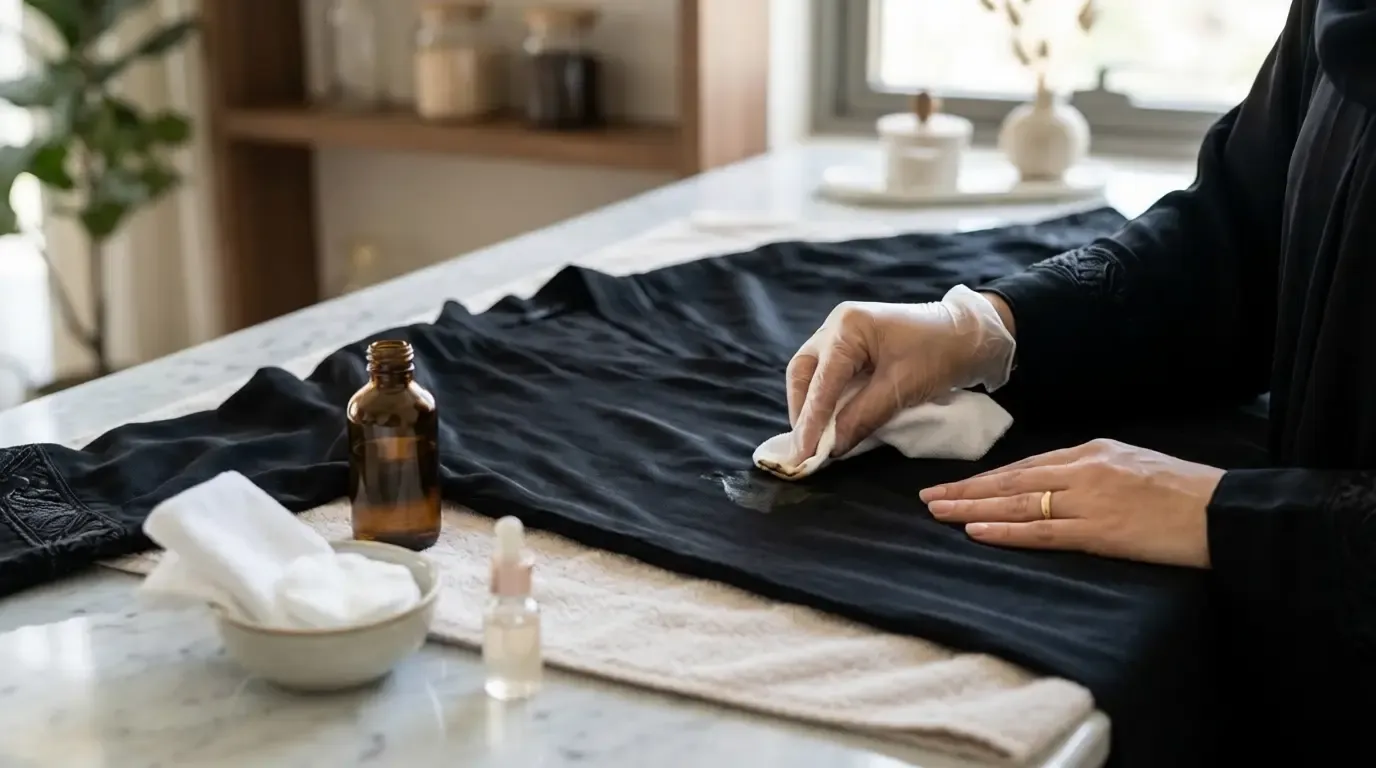
If something is spilled, act immediately but gently: blot with a dry cloth, straight down, no rubbing. Do not apply water and do not apply any home stain remover. Both do more damage to wool and zari than the original spill.
Professional cleaning only
When it genuinely needs cleaning, it needs a specialist solvent clean with the embroidery protected. Tell the laundry what it is before handing it over — a bisht going through a standard dry cleaning cycle with a normal press will come back with flattened, dulled zari, and that is not reversible. The cost of doing it properly is trivial against the cost of the garment.
Pressing
The rule is simple: nothing heavy, nothing hot, nothing directly on the embroidery. Steam from a distance relaxes creases in the wool. If pressure is needed it goes on the reverse, with a cloth between, and the embroidered areas are worked around entirely. A domestic iron pressed onto zari will flatten the metallic wind and the shine goes permanently dull.
Storage matters more than cleaning
Most bisht damage happens in the wardrobe, not in wear. Three things ruin them in storage. Moisture — Bahrain's humidity tarnishes metallic thread and encourages mildew in wool, so never store one in a sealed plastic cover. Compression — squashed between other clothes, the shoulders deform and the embroidery creases. Insects — wool is food for moths, and a bisht left untouched for a year is exactly what they look for.
Store it on a broad padded hanger with space either side, in a breathable cotton garment bag, somewhere dark and as dry as you can manage. Check it every few months rather than opening the bag once a year to a problem. Cedar is a safer deterrent than mothballs, which leave an odour in wool that is very hard to remove.
Before you put it away
Always clean a bisht before long storage, not after. Body oils and perfume you cannot see will oxidise into visible marks over a year, and they attract insects. Per-item pricing is on the price list — mention that it is a bisht when you book so it is routed to the right process rather than the standard one.