Protecting Your Clothes from Bahrain Humidity and Salt Air
Advice written for a desert climate does not quite fit Bahrain. Dust and heat are part of the story, but the thing that actually shapes how clothes age here is water in the air, Bahrain is a low island, and for much of the year the humidity is high enough to change what happens inside your wardrobe.
Why clothes smell musty
That faint stale smell in a cupboard is almost always microbial growth on fabric that was not completely dry when it was put away. In a dry climate a slightly damp shirt finishes drying on the hanger. In Bahrain's summer, the surrounding air is already close to saturated, so it does not, the moisture sits there, and within a day or two you have a smell that will survive a normal wash.
Three habits fix most of it. Never leave washing in the machine after the cycle ends; wet fabric in a warm drum is the fastest route to the problem. Do not fold anything that is even slightly damp. And if you air-dry indoors in summer, do it in a room with moving air rather than a closed bathroom, which is effectively a humidity chamber.
Mildew is the next stage
Left long enough, damp fabric grows visible mildew, small grey, black or pink speckles, most often on items stored at the back of a wardrobe or in a sealed bag. Cotton and linen are most vulnerable. Leather and canvas bags are close behind, which is why a handbag put away after the winter often comes out spotted.
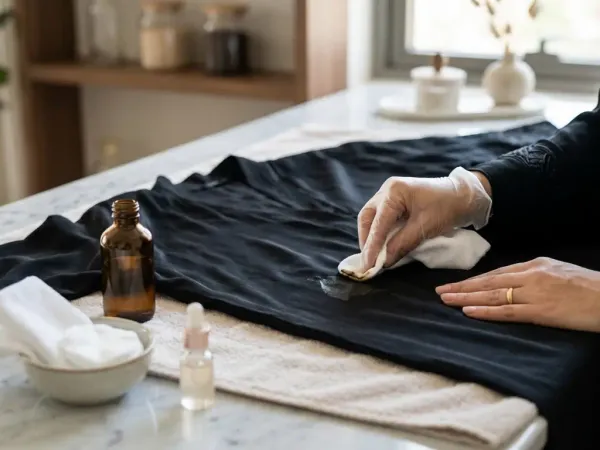
Mildew stains are removable when caught early and frequently permanent when not, so this is one to act on immediately. It also spreads to whatever is touching it, so an affected item should come out of the wardrobe before it is treated, not after.
Salt air and coastal living
If you live near the water, Amwaj, Busaiteen, along the Seef and Bahrain Bay shoreline, or out towards Zallaq, there is fine salt in the air, and it settles into fabric. It is not dramatic, but it accumulates: cotton starts to feel stiff and slightly rough, dark colours look chalky, and the fabric loses its drape.
Salt rinses out easily in a proper wash. The mistake is treating stiff fabric as worn out rather than as needing washing. The same applies to swimwear and beach towels, which should be rinsed in fresh water the same day rather than dried with salt and chlorine still in them, that combination degrades elastane quickly, which is why swimwear loses its shape after one summer.
Metal, leather and trim
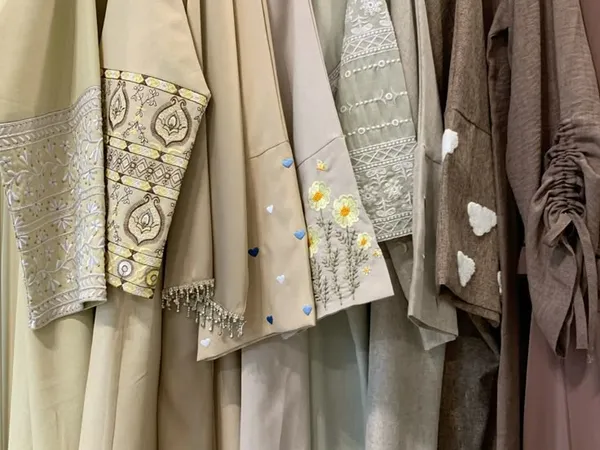
Humidity attacks the parts of a garment that are not fabric. Zips corrode, metal buttons and buckles tarnish, and the zari embroidery on a bisht or an occasion abaya dulls. Leather shoes and bags develop surface mould in a closed wardrobe. None of this is about cleanliness, it is purely moisture and time.
The counter-measure is airflow. Do not pack a wardrobe tight; leave a gap between garments. Do not store anything in sealed plastic, which traps moisture against the fabric rather than protecting it from anything. Breathable cotton covers for occasion pieces, and a wardrobe door left open occasionally, do more than any product.
Seasonal storage
Clothes going away for a season should be clean and completely dry first. Body oils and food residue you cannot see are what mould feeds on and what oxidises into yellow marks, a garment stored dirty is the one that comes out ruined. Silica gel sachets in a wardrobe genuinely help here, and cedar deters insects without leaving the odour that mothballs do.
For anything that has already picked up a musty smell or salt stiffness, a proper wash usually resets it, wash and fold from BD 5.000 per 6 kg bag, collected from your door. Say if something smells musty when you book so it can be treated rather than just washed.