Surviving a Bahrain Summer Without Wrecking Your Wardrobe
Between June and September, Bahrain does something to clothing that a mild climate does not. You change more often, everything is worn against skin that is perspiring, and garments go from clean to needing a wash in a single wearing. The wardrobe that lasted three years in a cooler country ages noticeably faster here, but most of that damage comes from how it is washed, not from the heat itself.
Wash sooner, not hotter
The instinct with sweat is a hot wash. It is the wrong instinct: heat sets protein, so a hot cycle on a perspiration mark fixes it into the fabric rather than removing it. Warm water and a prompt wash beat hot water and a delayed one every time.
Timing matters more than temperature in summer. A shirt washed the day it was worn comes clean easily. The same shirt left in a basket for four days in a warm room has had bacteria working on it, and both the smell and the yellowing become genuinely stubborn.
The underarm problem
Yellow stiffening under the arms is not sweat alone, it is aluminium in antiperspirant reacting with sweat and bonding to the fibre. Heat accelerates and then permanently sets it. Two things help: let antiperspirant dry completely before dressing, and never tumble dry or iron a garment with an untreated underarm mark, because that is the step that makes it permanent.
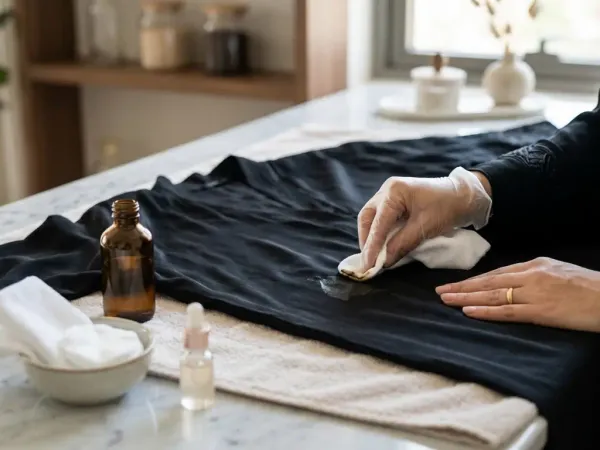
For a build-up that already exists, the area needs treating directly and given time to work before washing. Once it has been heat-set repeatedly it may not fully recover, which is why catching it early matters.
How often to wash what
Underwear, socks and anything worn for sport: every wearing, no exceptions. T-shirts and anything directly against skin: every wearing in summer. Thobes: realistically every wearing in July and August. Trousers and jeans: every three or four wears unless marked. Blazers and structured jackets: rarely, air them instead, since over-cleaning wears out the internal structure faster than the wearing does.
The common mistake is treating summer like winter and stretching wears. In this heat, that is how permanent odour gets established in the fabric.
Sun fading is real and fast
Bahrain sunlight will strip colour from fabric on a balcony line faster than most people expect, a dark garment can visibly fade in a few afternoons. Dry darks inside out, and preferably in shade or indoors. Whites are the exception: sunlight genuinely helps them, and a white cotton thobe benefits from it as long as it is not left out for days.
Car boots and gym bags
The two places summer clothes are ruined. A bag of gym kit left in a car in August is at oven temperature with trapped moisture, that is the fastest way to establish a smell that will not wash out. Take damp clothing out of the car and out of the bag immediately, even if you cannot wash it until later. Airing it beats sealing it every time.
Making it someone else's problem
Summer is when the volume of washing roughly doubles for most households, which is exactly when a collection service earns its keep. wash and fold is BD 5.000 for a 6 kg bag, with pickup and delivery free over BD 3.000, so the extra summer load does not become extra summer work. Anything needing individual treatment is priced on the price list.