How to Keep a White Thobe Actually White
A white thobe is unforgiving. It is the most visible thing a man wears in Bahrain and it shows every failure of care, a grey cast across the shoulders, a yellow collar edge, a shine where an iron sat too long. The good news is that almost all of it is preventable, and most of the damage comes from a single well-intentioned mistake.
The bleach trap
When a thobe starts looking dull, the instinct is chlorine bleach. It works once. Then it starts working against you: chlorine reacts with the protein and oil residues left in the fibre and, over repeated use, produces a yellow cast that is far harder to remove than the original greyness. It also weakens cotton, which is why heavily bleached thobes eventually tear at the collar and underarm rather than wearing thin evenly.
Oxygen-based whiteners are the better tool. They work more slowly, they do not attack the fibre, and they lift the greyness rather than masking it. Patience beats aggression on white cotton, every time.
Collars and cuffs are a different job
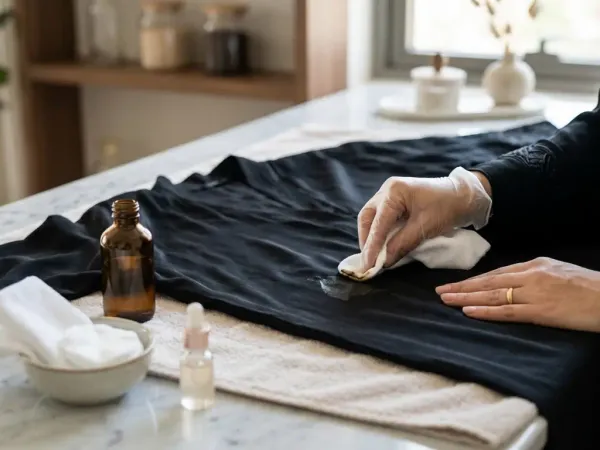
The grey line along a collar is not general dirt, it is body oil combined with hair product and sweat, and it sits in the fabric rather than on it. A normal wash cycle moves past it. It needs treating directly before washing: the area worked with a suitable pre-treatment, given time to act, then washed. Skipping the waiting step is why the mark survives wash after wash.
Cuffs pick up the same oils plus whatever your hands have touched. Both areas benefit from being treated every wash rather than only when the mark is visible, because once it has set through repeated heat it becomes genuinely difficult.
Yellowing under the arms
This one is chemistry, not hygiene. Aluminium salts in antiperspirant bind with sweat and with the fabric, and heat sets the result permanently. In Bahrain's summer that reaction happens fast. Two practical defences: let antiperspirant dry fully before dressing, and never tumble dry or press a thobe that still has an untreated underarm mark, the heat locks it in. Wash before the mark ages, not after.
Washing at home, properly
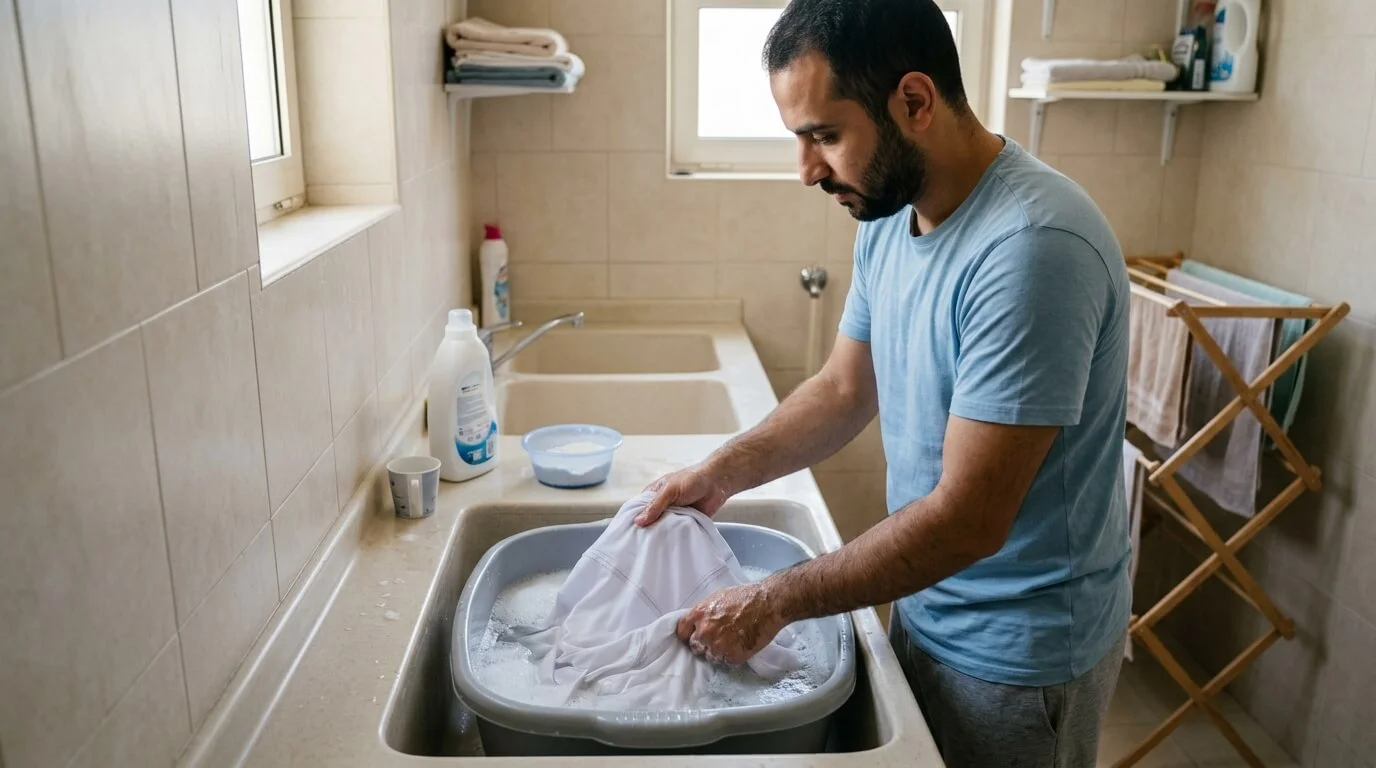
Wash thobes with other whites only, never with colours and never with towels, which shed lint that shows on smooth cotton. Use a moderate temperature, hot water sets protein stains rather than removing them. Do not overload the drum; a thobe needs room to move or it comes out creased in ways that are hard to press out. And take it out of the machine immediately. A damp thobe left folded in Bahrain's humidity will develop a musty smell within hours.
Pressing without the shine
That glossy patch on a well-worn thobe is scorched fibre, and it does not come out. It happens when a hot iron meets fabric directly, especially over a seam or a placket where the material doubles. Press on the reverse where you can, use a pressing cloth over the front, and keep the iron moving. The collar, the front placket and the cuffs should be crisp; the body should be smooth but not flattened.
When to send it out
Home washing keeps a thobe clean. Professional finishing is what keeps it looking new, proper whitening without bleach damage, and pressing done on equipment that applies even pressure rather than the point pressure of a domestic iron. Our clean and press handles thobes individually, and per-item prices are on the price list.
One rule worth adopting: for a thobe you wear to Eid, a wedding or work, send it out. For everyday wear, wash at home and send it out every few wears to reset the finish. That combination keeps the wardrobe white without a laundry bill every week.