Wedding Dress Cleaning and Preservation in Bahrain
The dress comes off at the end of the night, goes back in its bag, and stays there. Months pass. When it is finally opened, there are brown marks along the hem and across the bodice that were not there before, and nobody spilled anything. That is the single most common thing that happens to wedding dresses, and it is entirely avoidable.
The stains you cannot see
Champagne, white wine, clear soft drinks and simple perspiration leave almost no visible mark on white fabric. They are sugars and body salts, and they are invisible when fresh. Over months they oxidise, and oxidised sugar turns brown. By the time you can see it, it has bonded with the fibre and become genuinely difficult to remove.
This is why the advice is always the same: clean the gown within a few weeks of the wedding, not when you next think about it. A dress cleaned promptly is straightforward. The same dress cleaned two years later may never come fully white again.
Bahrain adds a second clock
Humidity accelerates everything. A gown sealed in a plastic garment bag in a Bahrain wardrobe is in a warm, damp, unventilated environment, ideal conditions for mildew, which shows as small grey or black speckling that is even harder to treat than oxidation. Plastic is the worst possible storage material here, and it is what most dresses come home in.
If you cannot get the dress cleaned immediately, at minimum take it out of the plastic, hang it somewhere airy and dark, and keep it away from an exterior wall where condensation forms.
What proper cleaning involves
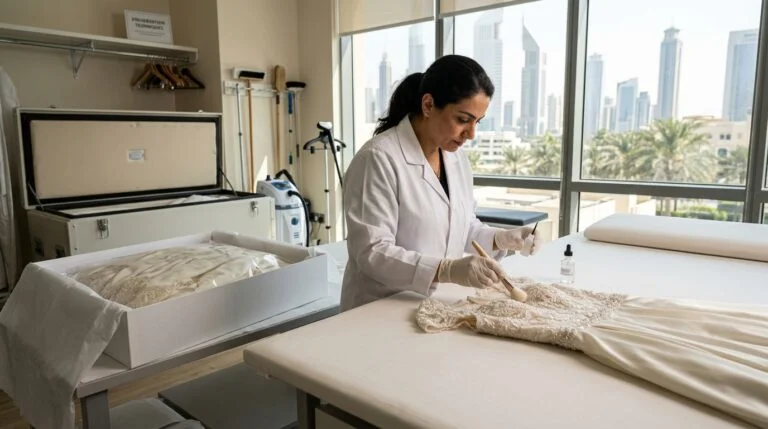
A wedding gown is not one fabric. There is usually a structured bodice with boning, a lining, an outer layer of silk, satin or tulle, and applied beading, lace or embroidery, each responding differently to solvent, moisture and pressure. Proper cleaning means inspecting the whole gown, treating the hem and underarms specifically, protecting embellishment, cleaning appropriately for the fabric, and finishing by hand.
The hem deserves particular attention. It has been dragged across floors, terraces and possibly sand all night, and hems on Bahrain weddings frequently pick up fine dust that has worked deep into layered tulle.
Preservation is a separate thing
Cleaning removes what is on the dress. Preservation is about the next twenty years: an acid-free box, acid-free tissue folded through the layers so the fabric never creases hard against itself, no plastic, and storage somewhere with a stable temperature. Ordinary cardboard and ordinary tissue are acidic and will yellow the fabric they touch, the box matters as much as the cleaning.
Store it flat rather than hanging. A heavy beaded gown hung for years pulls on its own shoulder seams until they distort or tear under the weight.
What to avoid entirely
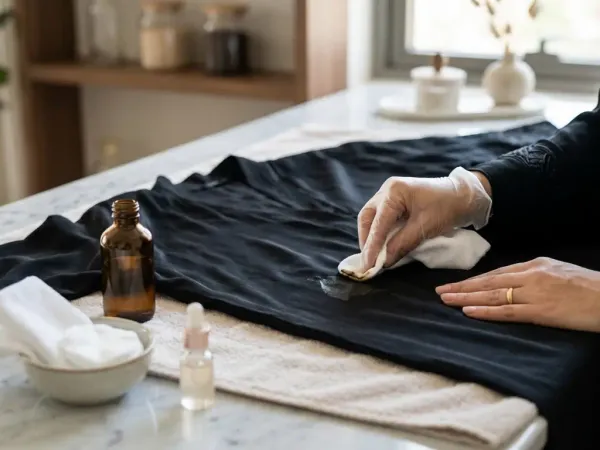
Do not attempt home stain removal on a gown, a water ring on silk is permanent and far more visible than the mark you were treating. Do not have it pressed without being cleaned. Do not vacuum-seal it, which crushes structure and traps whatever moisture was inside. And do not leave it in the car in summer; heat sets stains faster than anything else on this list.
Getting it done
Our wedding dress cleaning covers inspection, treatment, cleaning and hand finishing, with preservation boxing available. Bring it in as soon as the wedding is over, a fortnight is a very different job from a year. If it has already been stored badly, it is still worth asking; oxidation can often be improved even when it cannot be perfectly reversed.