Why Your Clothes Dry Slower in January Than in August in Bahrain
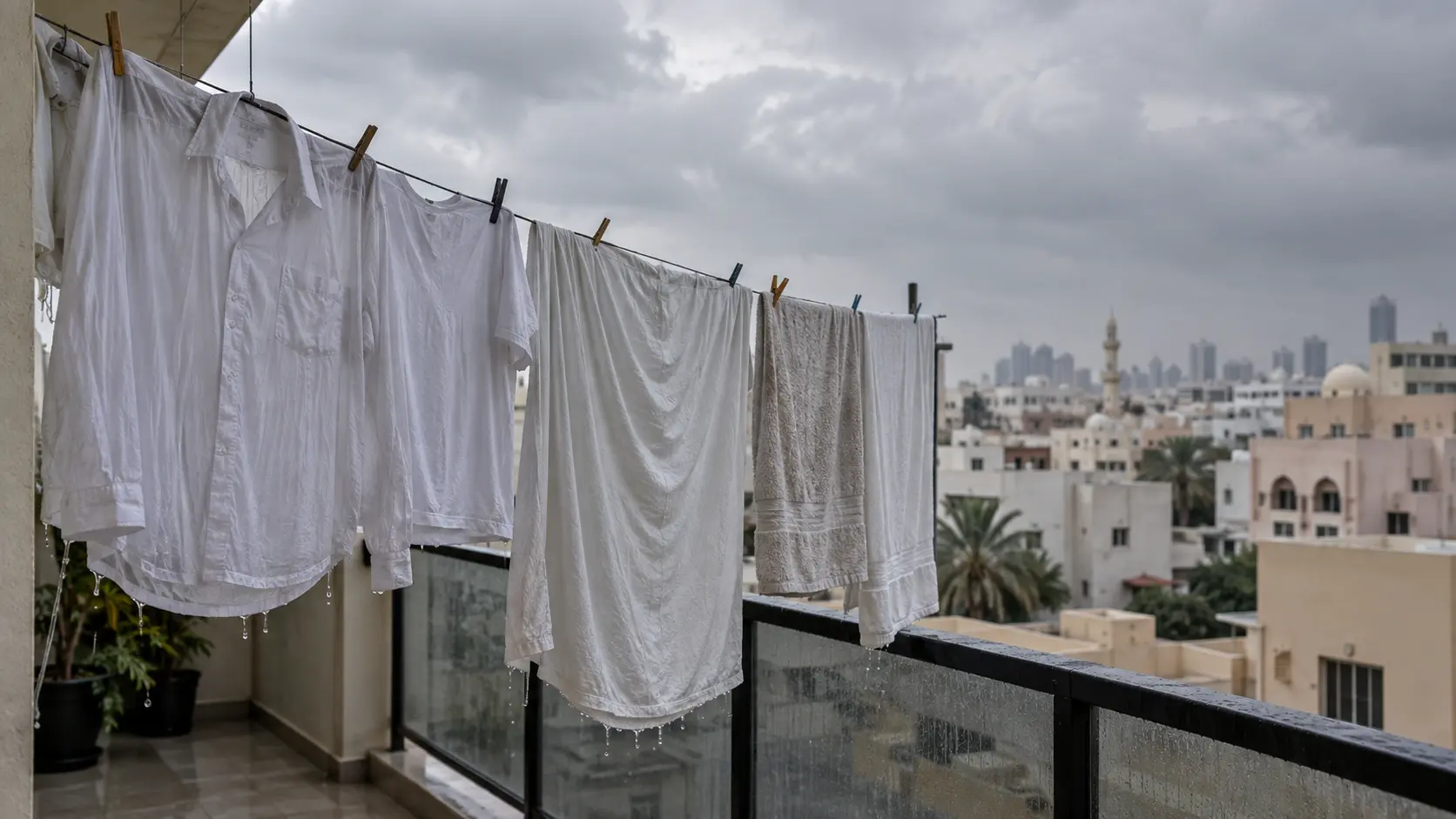
Your clothes dry slower in January than in August because Bahrain's humidity peaks in winter, not summer. Mean relative humidity in Manama is 69.5% in December and 67.9% in January, against 49.8% in June. Wet fabric releases water only as fast as the surrounding air will accept it, so a load hung out on a mild January evening can still be damp a full day later, while the same load in June is dry in a few hours. Heat is not what dries your washing. Dry air is.
This catches almost everyone out, because it contradicts how a Bahrain summer feels. Below is the full year, measured, followed by what it means for how you wash between November and March.
What does Bahrain's humidity actually do across the year?
Relative humidity in Manama runs highest from November to February, peaking at 69.5% in December. It falls through spring to a low of 49.8% in June, then climbs again through late summer. The swing between the wettest and driest month is nearly 20 percentage points, which is more than enough to change drying from a three-hour job into an overnight one.
| Month | Relative humidity | Mean temperature | Outdoor drying |
|---|---|---|---|
| January | 67.9% | 17.7°C | Very slow |
| February | 66.5% | 18.4°C | Very slow |
| March | 61.6% | 21.6°C | Slow |
| April | 54.6% | 25.8°C | Good |
| May | 50.4% | 30.6°C | Fastest |
| June | 49.8% | 33.7°C | Fastest |
| July | 53.4% | 35.2°C | Good |
| August | 57.7% | 35.3°C | Moderate |
| September | 59.8% | 33.5°C | Moderate |
| October | 63.0% | 29.9°C | Slow |
| November | 64.3% | 25.0°C | Slow |
| December | 69.5% | 19.8°C | Very slow |
Note what the two rightmost columns do. December is the most humid month and one of the coolest. Those two work in the same direction, and that is why winter drying fails.
Why does damp air stop clothes drying, even when the day is mild?
Drying is not heat pushing water out of fabric. It is water moving from the wet cloth into the air around it, and that only happens while the air has room to take more. Relative humidity is a measure of how full the air already is. At 68%, it is more than two-thirds full before your washing arrives.
So a warm, dry June day and a mild, damp January day behave completely differently. In June the air is half empty and pulls moisture out quickly. In January it is nearly saturated and takes it grudgingly.
Then the sun goes down. Air cools, its capacity to hold moisture drops further, and the humidity climbs towards saturation. At that point the transfer can stop or reverse.
What actually goes wrong with a winter wash load?
Three things, in sequence. The load fails to dry within a day, overnight dew puts moisture back into it, and the extended damp period breeds the bacteria that cause a sour smell. At that point the garment needs re-washing, so the load has cost twice the water, twice the detergent and two days.
In our own collections across Bahrain through winter, the pattern is consistent enough to plan around:
- Up to 24 hours to dry a normal cotton load hung outdoors in December and January, against a few hours in early summer.
- Overnight dew undoes daytime progress. Washing that was almost dry at sunset is frequently damp again by morning.
- A damp, sour odour develops in fabric that stays wet too long — and it does not air out. It needs a re-wash.
- Heavy items barely move. Towels, jeans, thobes and bedding hold far more water to begin with, so they stall first.
The winter version of a laundry problem is rarely a stain. It is a load that never properly dried, and got put away anyway.
Why does the sour smell not wash out by airing?
Because the smell is produced by bacteria growing in the damp fibres, not by trapped odour sitting on the surface. Airing removes moisture but leaves the colonies behind, so the smell returns the next time the garment is worn and warmed by body heat.
A proper re-wash followed by fast drying is the only reliable fix. Fabric softener masks it for a day or two, then it comes back.
Which months can you safely line-dry in Bahrain?
April to October are dependable on humidity grounds, with May and June the fastest of the year at roughly 50%. November and March are workable if you hang early and bring the load in before sunset. December, January and February are the months where a load can genuinely fail to dry within a day.
- May and June (50%): fastest drying of the year. Hang anything.
- April, July, September (55–60%): reliable, but bring heavy items in before dusk.
- March, October, November (61–64%): hang by mid-morning, indoors before sunset.
- December, January, February (66–70%): assume outdoor drying will not finish. Plan for indoors or machine drying.
Summer brings its own problems that humidity alone does not capture — dust and UV fade in particular. We cover the full year-round argument in our guide to line-drying in Bahrain.
How should you change your laundry routine from November to March?
Shift the whole cycle earlier in the day, reduce what you ask a single load to do, and stop treating outdoors as the default. The aim is to get fabric from wet to dry inside about eight hours, because that is roughly the window before odour-causing bacteria take hold.
- Wash in the morning, not the evening. An evening wash hung overnight in winter is the single most common cause of a sour load.
- Use a higher spin speed. Every extra minute of spin removes water the air then does not have to.
- Hang with space between items. Crowded lines trap a humid pocket that never clears.
- Bring washing in before sunset. After dark, dew works against you.
- Dry indoors with airflow, not a closed room. A closed room simply becomes as humid as the washing.
- Do not put away anything that feels cool to the touch. Cool usually means still damp.
What about thobes, abayas and heavier fabrics?
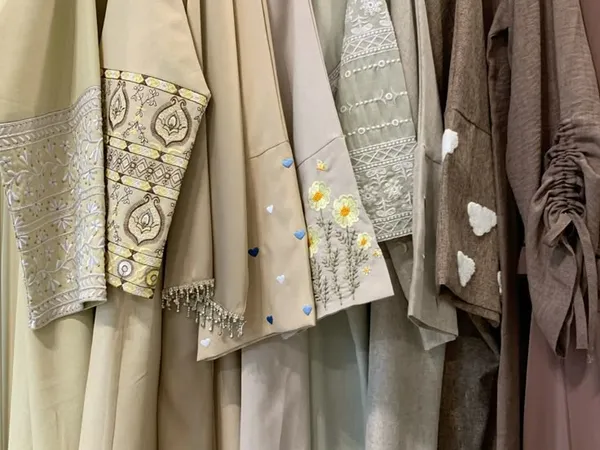
They are the first to fail in winter and the most expensive to get wrong. A thobe holds a lot of water, needs to dry flat and white, and picks up a grey cast if it stays damp. An abaya's weight and lining make it slower still.
For winter specifically, these are the items worth handing over rather than gambling on a line. See our thobe cleaning and whitening guide and abaya care for the garment-specific detail.
Does this affect bedding and towels differently?
Yes, and more severely. Towels and bedding carry several times the water of a shirt, so they stall earliest and stay damp longest. A winter duvet cover hung outdoors in Bahrain is close to a lost cause.
Washing frequency matters more in winter as a result, because a slow-drying item sitting in a basket compounds the problem. Our guidance on how often to wash bedding and towels applies year-round, but the drying half of it is what changes between seasons.
Does where you live in Bahrain change any of this?
It changes what the damp does, rather than how fast things dry. Humidity is broadly consistent across an island this size, but coastal exposure is not uniform in its effects — salt in the air interacts with slow-drying fabric, leaving cottons stiff and corroding metal fittings.
Given that 95.2% of Bahrain's 104 districts sit within 5 km of the coastline, that applies to almost everyone. We measured it district by district in our piece on coastal salt and clothing.
When is it worth handing winter laundry over?
When the drying, not the washing, is the part you cannot control. A machine wash at home is straightforward in any season. Getting a full load from wet to properly dry inside eight hours in a 68% humidity December is the part that fails.
Our wash and fold service returns laundry dried and folded within 24 hours, and clean and press covers garments that need finishing as well. Free pickup and delivery across every area of Bahrain.
What does a failed winter load actually cost you?
More than the re-wash. A load that fails to dry costs a second lot of water, detergent and electricity, two days of the garment being unavailable, and a measurable slice of its usable life. Repeated wash cycles are the main driver of fabric wear, far more than wearing the item.
- Double the water and detergent for a single clean set of clothes.
- Two days instead of one before the item is wearable again.
- Extra fibre wear. Every wash sheds fibre; the second one was avoidable.
- Colour loss compounds with each additional cycle, particularly on darks.
- The smell may persist if the first attempt sat damp long enough.
Across a winter, a household re-washing two loads a week is running roughly thirty avoidable cycles. That is the real cost of treating outdoor drying as free.
Should you use a machine dryer in a Bahrain winter?
If you own one, winter is when it earns its place. The months where a dryer is genuinely useful here are narrow — December through February — but in those months it is the difference between dry clothes and a re-wash.
The caution is heat. High-heat cycles shrink cotton and damage elastane, and they are unnecessary when the problem is humidity rather than cold. A low-heat or air-flow cycle for ninety minutes usually finishes a load that the line could not.
Does detergent choice change in winter?
Slightly. Most detergents are formulated to work at 30°C and above, and Bahrain mains water runs noticeably colder in January than in July. A cold-water formulation, or a marginally warmer cycle, dissolves and rinses more completely.
Undissolved detergent left in fabric is its own problem: it attracts moisture and contributes to the stiff, slightly tacky feel people often blame on hard water.
The short version
- Bahrain's humidity peaks in December (69.5%) and January (67.9%), not in summer.
- The driest month is June at 49.8% — a 20-point swing across the year.
- Winter loads hung outdoors can take up to 24 hours, and overnight dew reverses daytime progress.
- Fabric damp for more than about eight hours develops a sour odour that requires a re-wash.
- Wash in the morning, spin harder, space the line out, and bring it in before sunset.
- December to February, assume outdoor drying will not finish the job.
Humidity and temperature figures are mean monthly values for Manama from the Open-Meteo ERA5 reanalysis archive, 2015–2024, licensed CC BY 4.0. Drying times and odour observations are from Laundrykhalas collections across Bahrain. Last reviewed September 2026.